
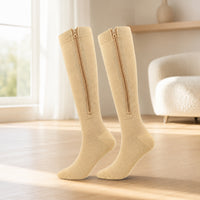
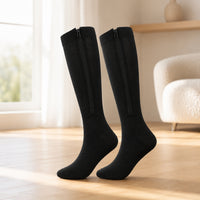


Zip-Up Compression Socks with Graduated 15–20 mmHg Support
Swollen ankles, tired legs, and the daily ache of poor circulation affect millions of Australians — especially those on their feet all day, recovering from surgery, or sitting through long-haul flights. These zip-up compression socks deliver graduated 15–20 mmHg support without the struggle of pulling on traditional compression hosiery. The side zipper makes them accessible for people with limited hand strength, reduced mobility, or post-surgical sensitivity.

What These Socks Do:
Graduated 15–20 mmHg compression — firmest at the ankle, easing toward the calf to actively push blood back toward the heart and reduce pooling
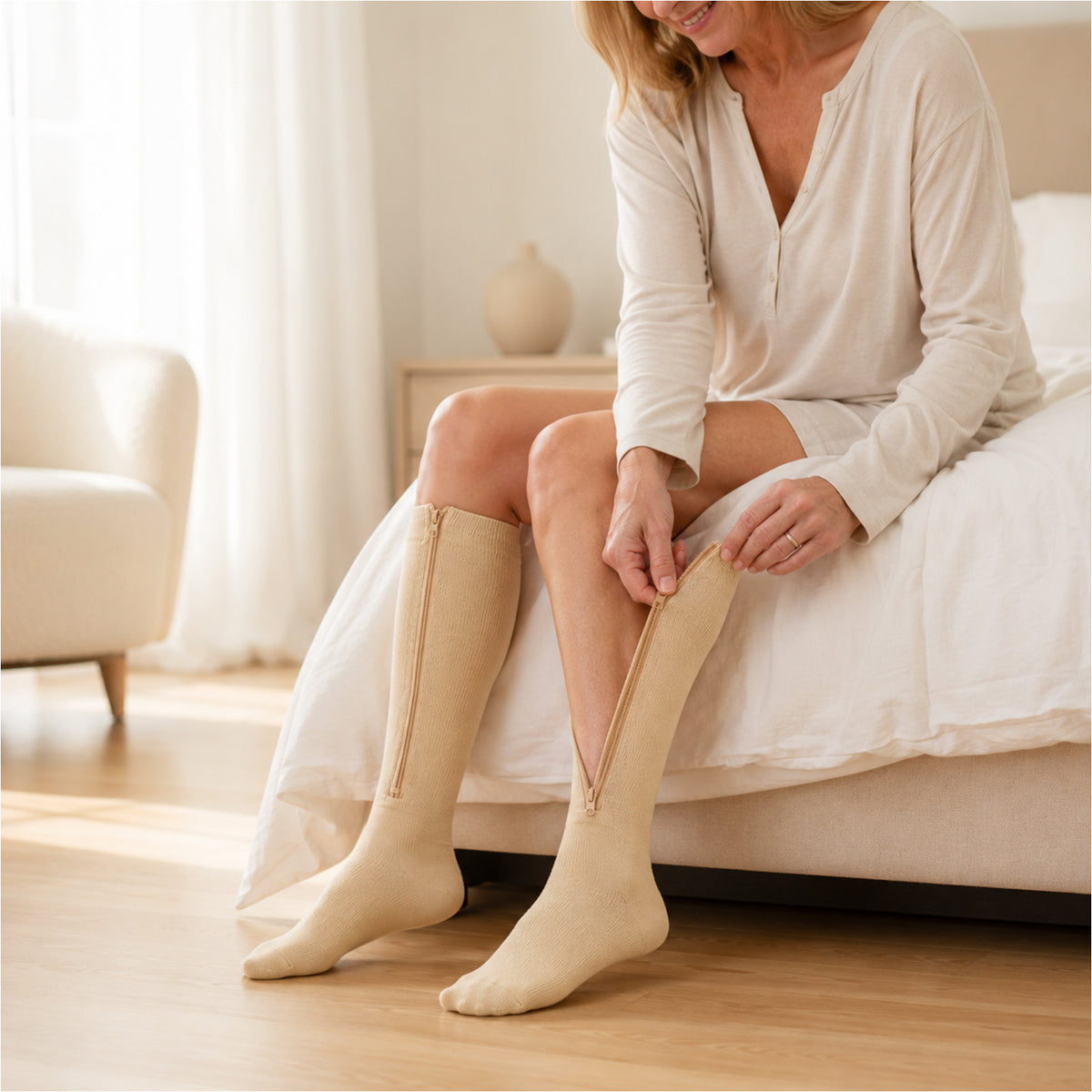
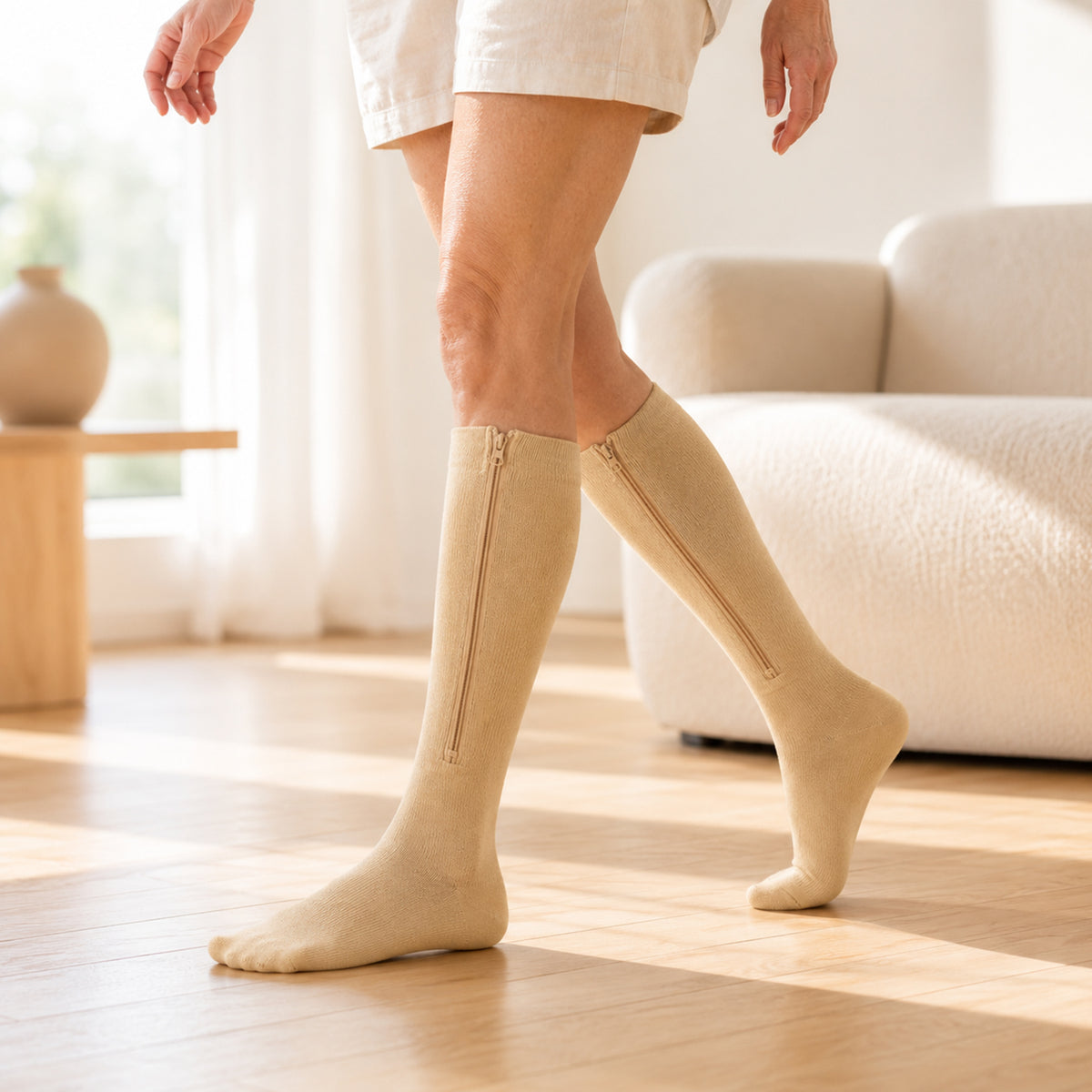
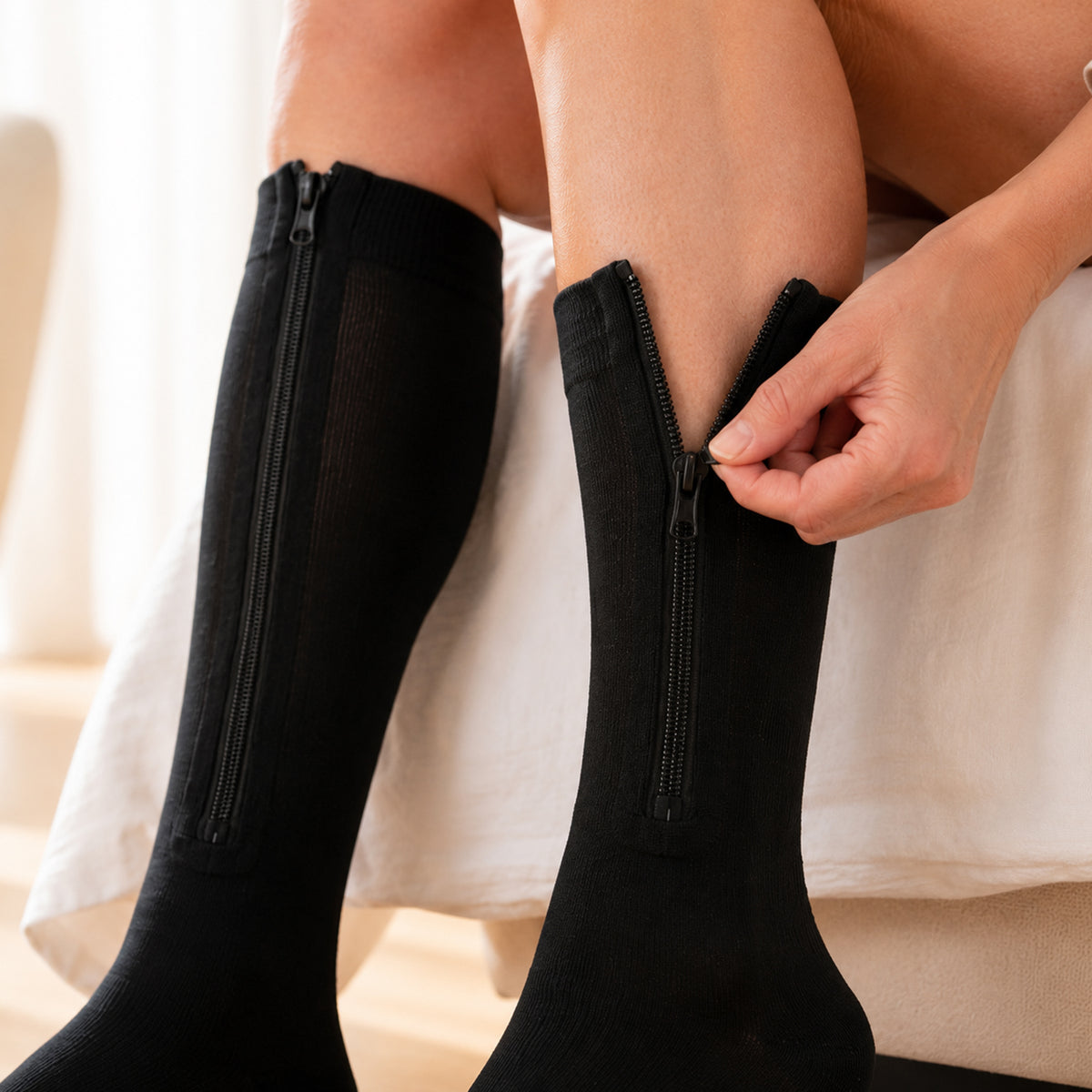
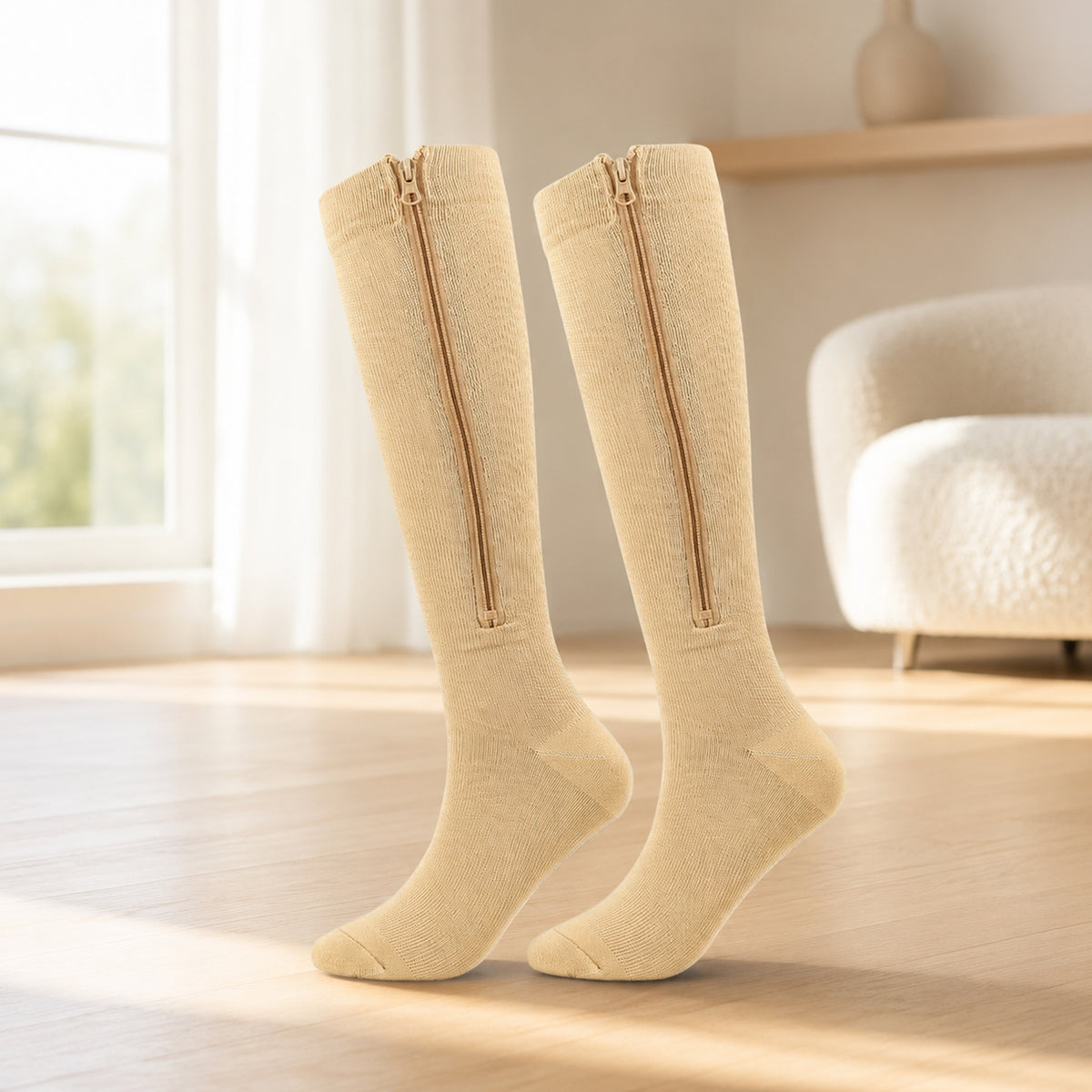
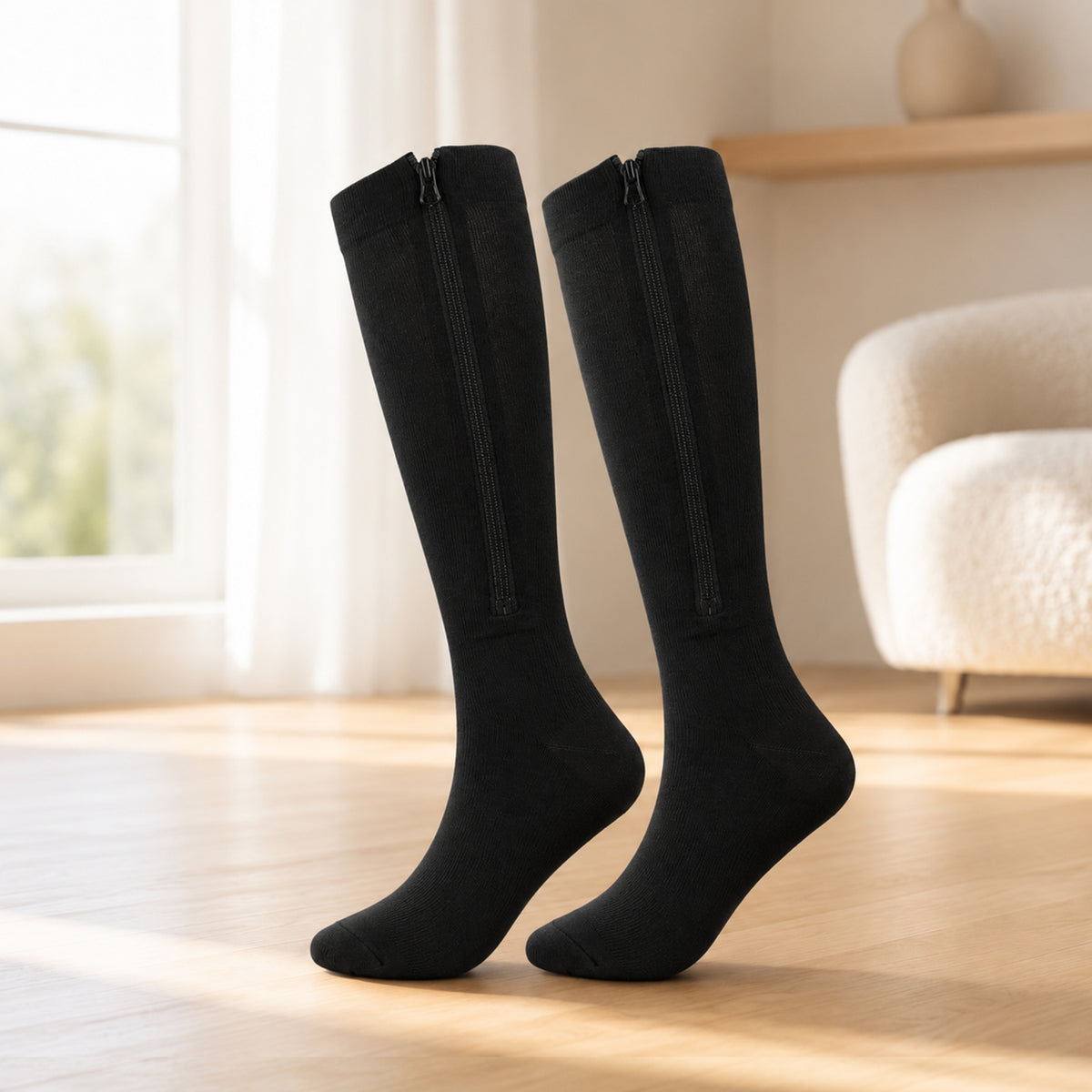
Full-length side zipper — runs the length of the sock so you can put them on and take them off without bending, twisting, or pulling; suitable for arthritic hands and post-surgical limbs
Breathable knit fabric — moisture-wicking construction keeps skin dry during all-day wear, including during light walking and standing
Reinforced heel and toe panels — high-wear zones are double-layered to maintain shape and compression integrity through repeated washing
Available in S/M, L/XL, and XXL — sizing spans a broad range to deliver accurate graduated compression across different calf circumferences

How They Feel
Firm but not constricting — the 15–20 mmHg range is perceptibly snug at the ankle and gently releases pressure as it moves up the calf; most wearers notice a difference within the first hour of use
Smooth inner surface — the knit lining sits flat against the skin without bunching or rolling at the ankle, which is a common irritation point with standard compression socks
Breathable through a full day — the fabric stays noticeably cooler than neoprene or thick orthopaedic alternatives, making extended wear through an Australian summer workday realistic
Light at the end of the day — consistent feedback from compression sock users is that legs feel less heavy by mid-afternoon compared to wearing no compression; the zipper makes removal at the end of the day effortless, even when fatigued
Who These Are For
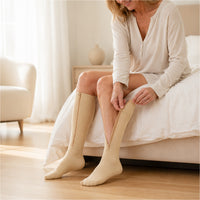
Elderly wearers with limited mobility — the zipper removes the need to stretch or pull, making independent dressing possible for those with reduced hand grip or hip flexibility
Post-surgical patients — recovering from varicose vein treatment, knee replacement, or lower-limb surgery often require consistent compression; the zipper allows gentle donning over sensitive or bandaged skin
DVT risk patients and long-haul travellers — anyone sitting for 4+ hours on a flight or long drive benefits from graduated compression to reduce deep-vein thrombosis risk
People who stand all day — retail workers, teachers, hospitality staff, and healthcare workers who are on hard floors for 8–10 hour shifts experience a significant reduction in ankle swelling with consistent use
Pregnant women in the third trimester — lower-limb oedema is common from 28 weeks onward; the zipper allows easy dressing as bump size changes, and bending becomes difficult
Carers and nurses with arthritic hands — traditional compression hosiery requires significant hand strength to don correctly; the zipper removes that barrier entirely
Anyone who has given up on compression socks — if the pull-on variety was abandoned because it was too difficult, zip-up compression socks reopen that option
How They Work
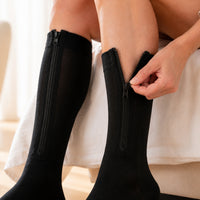
- Open the zipper fully from toe to calf, lay the sock flat, and slide your foot in — no bunching, no pulling, no awkward angles
- Position the heel cup correctly so the reinforced panel sits flush against the heel bone; this alignment ensures the compression gradient sits at the anatomically correct points on the ankle and calf
- Zip upward in one smooth motion from the ankle toward the knee; the sock self-adjusts around the calf as it closes, delivering 15–20 mmHg graduated compression
- Wear for the duration of your activity — suited for daytime use during travel, work shifts, or post-surgical recovery periods as directed by your health professional
How They Compare
|
Feature |
Zip-Up Compression Socks |
Standard Pull-On Compression Socks |
Compression Boots / Sleeves |
TED Anti-Embolism Stockings |
|
Compression level |
15–20 mmHg graduated |
15–20 mmHg graduated |
Variable (device-driven) |
8–18 mmHg |
|
Ease to put on |
High — full side zipper |
Low — requires significant hand and leg strength |
Moderate — wrap or velcro |
Moderate — open toe, easier than closed |
|
Suitable for limited mobility |
Yes |
No |
Partial |
Partial |
|
Wearable |
Yes |
Yes |
No — plugged-in device |
Yes |
|
Breathable fabric |
Yes |
Yes |
No — typically neoprene |
Partial |
|
Price (AUD) |
$39.99 |
$20–$45 |
$150–$600+ |
$30–$60 (clinical supply) |
What These Replace
For many wearers, these socks replace a combination of compression hosiery that proved too difficult to don independently, plus the ongoing cost of allied health appointments to manage chronic lower-limb swelling. At $39.99 per pair, a single purchase replaces multiple chemist-brand compression socks that were purchased and abandoned. They also reduce the frequency of compression garment fittings for wearers who previously needed assistance putting on standard hosiery.
Specifications:
Compression level: 15–20 mmHg (graduated, ankle-highest)
Closure: Full-length side zipper from toe to upper calf
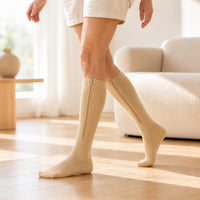
Available colours: Black, Beige
Available sizes: S/M, L/XL, XXL
Fabric composition: Breathable knit blend (moisture-wicking)
Heel and toe construction: Reinforced double-layer panels
Wash method: Machine wash cold, gentle cycle; hang to dry
Country of sale: Australia
Price: $39.99 AUD per pair
What Is Included:
1× Pair of Zip-Up Compression Socks in your selected colour and size
1× Care instruction label (attached to garment)
Frequently Asked Questions
What compression level do these socks provide? These socks provide 15–20 mmHg of graduated compression. That means pressure is highest at the ankle — approximately 20 mmHg — and decreases progressively up the calf to around 15 mmHg. This range is widely used for general circulation support, travel, and mild to moderate oedema management.
How do zip-up compression socks work differently from regular compression socks? The compression mechanism is identical — graduated pressure from ankle to calf. The difference is entirely in donning. Standard compression socks must be rolled and pulled on, which requires significant hand strength and flexibility. Zip-up compression socks open completely so your foot slides in flat, then the zipper closes the sock around your leg. The compression outcome is the same; the effort to get them on is dramatically lower.
Who should wear 15–20 mmHg compression socks? 15–20 mmHg is suitable for most general-wellness and travel use cases: prolonged sitting or standing, mild ankle swelling, varicose vein prevention, and long-haul flights. If you have been prescribed a specific mmHg rating by a doctor or physiotherapist, follow that prescription. If you have significant cardiovascular conditions, consult your GP before starting compression therapy.
How tight should compression socks be? Compression socks should feel firm, particularly at the ankle, but should not cause pain, skin colour change, or numbness. If you feel tingling or notice the sock is digging into the skin at the top, the size may be too small. Refer to the size guide for calf circumference and shoe size ranges before ordering.
How long can I wear these each day? Most people wear graduated compression socks throughout the waking day — typically 8–12 hours — and remove them before sleep. Prolonged overnight wear is not recommended for general wellness use. If you are wearing compression socks post-surgically or under medical direction, follow your health professional's guidance on duration.
How do I wash and care for them? Machine wash cold on a gentle cycle. Do not tumble dry — hang to dry away from direct sunlight. Avoid bleach or fabric softener, as both degrade elastic fibres and reduce compression effectiveness over time. Washing after each use maintains hygiene and extends the compression life of the garment.
Which size should I choose? Size is based on shoe size and calf circumference. S/M suits most women's shoe sizes 5–8 and men's 4–7 with a calf circumference up to approximately 38 cm. L/XL suits shoe sizes up to women's 11 / men's 10 with calf up to approximately 45 cm. XXL suits larger calf circumferences above 45 cm. If you are between sizes, size up for comfort.
Shipping, Returns and Support
Free standard shipping on all Australian orders
Estimated delivery: 3–7 business days metro; 5–10 business days regional
30-day returns accepted for faulty or incorrectly supplied items; change-of-mind returns are assessed case by case — contact support before returning
AfterPay available at checkout
Support: Contact Pain Relief Australia via the website chat or email for sizing questions, order issues, or clinical queries
Frequently Asked Questions
We will ship your order as fast as we possibly can. When your order ships, we will send you an email letting you know that it is in transit.
We perform an in house quality check before packaging your order and getting it ready to be shipped, then we will assigning a unique tracking number for your order.
These processes may take some time depending on staffing limitations set by COVID-19 and other logistical warehouse procedures. Thank you kindly for your patience.
We stand by the quality of our products and we perform quality assurance tests before shipping them to our valued customers. Despite this we cannot always ensure a safe delivery. If your item arrives broken or with an issue, please contact us within 30 days and we will get back to you with a solution.
Our main office are located in Adelaide, South Australia, and we ship and process all of our orders from our warehouse which is based in Sydney, New South Wales
We accept all major forms of payment, including Apple Pay, Google Pay, Visa Cards, Master Cards and Pay Pal. If you have any questions referring to payment please do not hesitate to contact us.
No! Shipping is fast and FREE Australia wide.
