
Neck Pain Relief: A Complete Australian At-Home Recovery Guide
Do you often find yourself waking up with a stiff neck? Or maybe you always end a long workday with tightness or discomfort? If so, you are not alone. Unfortunately, neck pain is an extremely common issue that affects millions of people.
Desk workers, labourers, students, new parents constantly looking down at their babies, and nearly anyone who happens to sleep a little awkwardly are all likely to experience neck pain at some point. There is a bright side though: neck pain is usually fleeting.
Most aches and strains will resolve in just one or two weeks. And even the dreaded “tech neck” is often very reversible with a few lifestyle modifications and exercises.
This guide will take a deep dive into all you need to know about neck discomfort. We’ll cover everything from what causes it to red flags, tech neck, heat/cold relief, how to relieve neck pain, exercises, and when it’s time to see a doctor. By the end, you should have the info you need to understand what’s happening and ensure you get the neck pain relief you deserve.


“This guide is for general health information for Australian adults and is not a substitute for medical advice. If your pain is severe, follows a fall or accident, or comes with numbness, weakness, or pain radiating down your arm, please see your GP or visit healthdirect.gov.au.”

Pain can be very complex. Part of this is due to the fact that your neck is remarkably complex in and of itself.
Your cervical spine — the spinal structure that makes up your neck — is comprised of seven vertebrae (C1–C7). There are also several discs between the vertebrae that cushion these vertebrae. There are also dozens of muscles, ligaments, nerves, and joints. These all work together to support your head and allow your neck to move freely.
The neck is designed brilliantly. It enables us to look over our shoulder while driving, watch our children play, and do all the other important things we do every day. However, all these moving parts serve as potential points of discomfort.
And unfortunately, the source of the pain isn’t always so easy to identify.
Sometimes, all it takes is sleeping at an odd angle or spending a little too long hunched over your laptop. A nerve, joint, or disc may be the root of the issue. Understanding the most common causes can help you better identify what's driving your symptoms, though, and address them properly.
Muscular Strain
This is by far the most common cause of neck pain. Muscular strain is a simple mechanical issue that can arise for several reasons including:
- Sleeping “wrong” — i.e., your neck not supported properly
- Spending hours stuck in the same position
- Lifting something too heavy
- Repetitive or sudden movements
While annoyingly easy to occur, muscular strain usually improves within just a few days and goes away completely within two weeks or less.
Tech Neck and Postural Strain
For Australians under 50, “tech neck” or postural pain has become one of the leading contributors to recurring neck and shoulder pain. After all, many of us spend our entire workday staring at our computers, only to then come home and stare down at our phones or tablets all night. That places considerable stress on our cervical spine, resulting in stiffness and discomfort.
Cervical Disc Issues
The primary job of cervical discs is to sit between the vertebrae and help absorb force. However, through age-related wear and tear or injury, the jelly-like centre of these discs can sometimes bulge or herniate outside the regular parameters. When the bulge presses on a nearby nerve root, it can cause pain or weakness down the arm. This is known as cervical radiculopathy.
Not everyone who experiences this actually experiences symptoms, particularly if no nearby nerve roots are irritated. For those who do, though, this can cause significant pain that worsens with specific movements or positions. Symptoms can also extend beyond the neck and into the shoulder, arm, hand, or back.
Facet Joint Pain
Small joints located between the vertebrae called facet joints are prone to irritation. Age-related changes, repetitive loading, and injuries can all contribute to pain or other symptoms. A common tell of facet joint dysfunction is pain aggravated by turning your neck or extending it backwards.
Cervicogenic Headaches
While you’d naturally think a headache’s source lies in the skull, some actually originate in the neck. Known as cervicogenic headaches, these can cause pain that travels from the upper neck into the head. They are frequently mistaken for tension headaches or migraines, but are often managed differently.
Whiplash
Whiplash is a neck injury that occurs when the head is rapidly forced forward and backwards. It is most commonly caused by car accidents and results in a range of symptoms of varying severity. Symptoms also don’t always appear immediately, though many people will notice worsening pain, stiffness, or headaches within 48 hours of an accident.
What Neck Pain Usually Isn't
While neck pain is far from fun, its causes are not typically dangerous. Most serious causes like infections, fracture, or tumours are very uncommon.
For most people, pain improves steadily over one to two weeks. Chronic, recurrent discomfort isn’t usually a major cause for concern, either. They are instead most often related to posture, movement habits, and muscle conditioning rather than serious disease or structural problems.
A Quick Note on Shoulder + Neck Pain
Sometimes neck troubles just stay neck troubles. However, where neck pain is, shoulder pain often follows due to how closely the muscles and nerves work together. Irritation in one area can contribute to discomfort in the other.
Not all shoulder pain originates from the neck, though. Conditions such as frozen shoulder can cause serious pain and stiffness around the shoulder joint itself that may mimic neck-related conditions.
For most people, pain improves steadily over one to two weeks.
COMMON CAUSES


If you’ve ever caught your reflection in a shop window only to notice your head jutting forward, you’ve seen tech neck in action.
“Tech neck" is a musculoskeletal condition that can develop with prolonged periods of looking down at phones, laptops, or other devices. It’s also remarkably common.
Nearly anyone who spends more than four hours per day looking down at screens could develop it. However, office/remote workers, students, and gamers are at a particularly high risk.
Why Does Tech Neck Happen?
As for why the condition arises, you can thank your head.
In a neutral position, our heads weigh approximately 4.5 to 5 kilograms. But as the head tilts forward, the load placed on our cervical spines increases, pretty dramatically, in fact. At just a 60 degree tilt forward (think staring down at TikTok), that effective load rises to a whopping 27 kilograms.
That’s a lot, and all that extra weight has to be absorbed somewhere. In most cases, it’s unfortunately our necks and upper backs that pay the price.
The result is usually all-too-frequent recurring shoulder and neck pain. However, some other common signs of tech neck are:
- End-of-day neck stiffness
- Upper back tension
- Frequent headaches
- Rounded shoulders
- Forward head posture
Over months and years of hunching or craning our necks downward, our muscles change to accommodate. Sometimes they become lengthened and weak, others shortened and tight.
Either way, this alteration helps make changing our posture difficult and allows tech neck to persist. And the longer tech neck persists, the more difficult it is to reverse.
How to Fix Tech Neck
Fortunately, difficult doesn’t mean impossible. Tech neck pain and the condition itself can be corrected. It just takes a little consistency and effort.
Some of the most effective strategies to help tech neck include:
- Holding your phone up when using it (the kids will laugh, but trust us — your neck will thank you)
- Using a standing desk or laptop stand with an external keyboard
- Taking short posture breaks every half hour
- Performing regular chin tucks and shoulder rolls
- Strengthening the deep neck flexors and upper-back muscles
- Sleeping on your back or side rather than your stomach
At just a 60 degree tilt forward, that effective load rises to a whopping 27 kilograms.
Most neck issues are not a big deal and improve with simple self-care. That said, certain symptoms can signal that something more serious is happening and call for urgent medical assessment.
Be sure to seek immediate medical help if you experience any:
- Severe neck pain following a fall, accident, injury, or other trauma
- Neck pain accompanied by fever, chills, or feeling generally unwell
- Pain associated with numbness, weakness, or a loss of sensation in the arms/hands
- Loss of bladder or bowel control (rare but requires urgent assessment)
- A severe headache or migraine combined with a stiff neck
- Sudden severe pain for no obvious reason
You might also want to book an appointment with your GP or physiotherapist within a few days if:
- Your neck pain doesn’t get better after a week or two
- You develop new tingling or pins-and-needles sensations in your arms
- The pain becomes severe enough to regularly disrupt your sleep
- Everyday activities are becoming increasingly difficult
If you’re ever in doubt whether something is normal or not, please see your GP. Healthdirect also provides further info about when neck symptoms should be assessed by a healthcare professional.
When your neck’s seriously aching, sometimes you need something more immediate than gentle stretches or posture correction. Heat and cold therapies can be a particularly big help in these situations. But which are you supposed to use?
The answer largely depends on timing.
During the first 24–48 hours, you’re best off using cold therapy. Applying a cold pack during these early stages of a new injury or flare-up can help not only ease discomfort but also reduce inflammation.
Just remember to keep the pack covered with a cloth to protect your skin and only apply for 15–20 minutes at a time. You can also repeat as needed, but keep it to once per hour or so.
And if pain lingers for 48 hours plus, or you have ongoing stiffness?
Heat therapy is probably going to be more beneficial than cold. Increasing blood flow and encouraging relaxation, it should make movement easier and relieve muscular tension. Using heat for 20 minutes in the morning can be especially helpful for easing overnight stiffness.
Heat packs and neck wraps are ideal for this, but don’t sleep on the magic of a warm shower or bath!
Also keep in mind that your mileage may vary. Many of our customers prefer alternating cold packs and heat therapy products, as heat loosens the muscles while cold calms any lingering irritation.

Find Relief with Our Neck Pain Range
Therapeutic pillows, heat wraps and supportive cushions.
Shop NowAs we discussed, gentle movement typically alleviates aches far better than rest. What neck pain exercises actually help, though, and what’s just marketing fluff? Below you’ll find six that truly work to reduce discomfort, improve mobility, and better your posture.
Be careful not to overextend yourself when trying them out. Neck and back stiffness may make some stretches feel a little uncomfortable, but there should never be true pain. In the event you experience any sharp pain, dizziness, numbness, or symptoms radiating into the arm, stop immediately.

Chin Tucks
Target: Deep neck flexors and forward head posture correction. The chin tuck is arguably the most important exercise for people with tech neck. Thankfully, it’s also one of the easiest to do!
How to do it
- Sit in a chair or stand tall, shoulders relaxed and back neutral.
- Look straight ahead.
- Gently nod your chin down to your chest (think making a double chin).
- Keep movements small and avoid tilting your head forward.
- Hold for 5 seconds.
- Relax and repeat.
Upper Trapezius Stretch
Target: Muscles running from the shoulders to the neck. The upper trapezius stretch is ideal for people with desk-based jobs. This particular exercise counteracts the effects of slouching, eases shoulder pain, and reduces trap tightness.
How to do it
- Sit or stand tall, back aligned.
- Slowly tilt your head to one side, bringing your ear to your shoulder.
- Make sure your other shoulder remains relaxed.
- Deepen the stretch by using your opposite hand to apply gentle pressure to the head.
- Hold until a comfortable stretch is felt.
Levator Scapulae Stretch
Target: Deep neck-to-shoulder muscles. The levator scapulae is one of the most commonly overlooked muscles when it comes to neck and shoulder troubles. If you've spent a lot of time recently on your phone or at the desk, this neck pain stretch should provide a little comfort.
How to do it
- Sit with feet flat to the ground.
- Reach your arm behind your back, anchoring it on your opposite shoulder blade.
- Turn your head about 45 degrees.
- Look down towards your armpit.
- Place your free hand gently on the back of your head.
- Apply light pressure to deepen the stretch.
Scapular Squeezes
Target: Muscles between the shoulder blades. Scapular squeezes are a simple but surprisingly effective exercise. They work to counteract pain and rounded shoulders while also improving overall shoulder health.
How to do it
- Sit or stand upright with arms hanging naturally.
- Gently pull your shoulder blades together and in towards your spine.
- Avoid shrugging your shoulders or bending your arms.
- Hold for 3–5 seconds.
- Slowly return to your starting position.
Doorway Chest Stretch
Target: Tight chest muscles. Tight chest muscles often contribute to forward shoulder posture. The doorway chest stretch addresses this, opening up the pecs to get you standing straighter and feeling better.
How to do it
- Stand in a doorway.
- Place your forearms flat on either side of the frame.
- Keep elbows at a 90 degree angle, somewhere around shoulder height.
- Step forward with one foot to stagger your stance.
- Slowly lean your chest and torso forward until you feel a stretch.
- Avoid arching your back by keeping the core engaged.
Gentle Neck Rotations and Side Bends
Target: Mobility and stiffness reduction. If neck stiffness is proving to be both a literal and figurative pain in your neck, these low-load rotations and side bends are for you. These movements can reduce the ache while bringing back more comfortable neck motion.
How to do it
- Stand or sit upright, back straight, and feet shoulder-width apart.
- For rotations, slowly turn your head until you’re looking over your shoulder.
- For side bends, look ahead and slowly tilt your head to one shoulder.
- Hold for 2–5 seconds before returning back to centre.
- Make sure to keep your back neutral and breathe as you turn.
Just remember that consistency matters more than intensity. Even performing these neck pain exercises a few times a week can give great results.
They won't perform miracles, but they can certainly contribute to better posture, less stiffness, and reversing tech neck.
At some point, though, you might want to change things up. Try adding some resistance!
Many people find adding resistance band training to their routine seriously improves both their upper back and shoulder pain.
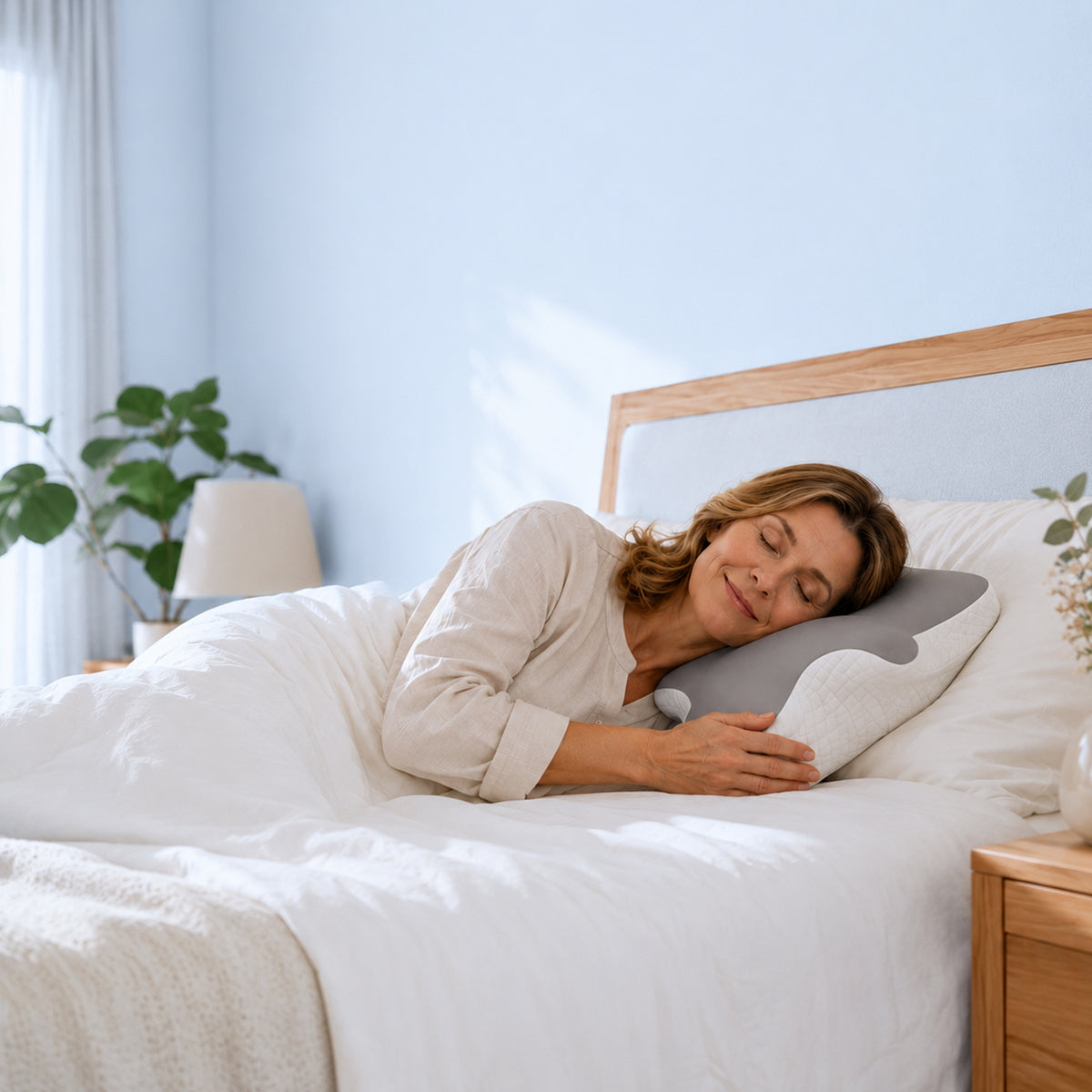
Trying to figure out how to relieve neck pain? Improving your sleeping setup is one of the easiest steps you can take. The right pillow is particularly essential for this. Yet, how do you know what to buy?
Search “the best pillow for neck pain Australia,” and you’ll get hundreds of different options. They’re all in varying thicknesses, materials, and brands, some of which will only hurt your sleep.
Our advice: focus on alignment rather than marketing claims.
The ideal pillow isn’t always what gets number one on some random listicle. Instead, it’s what will keep your neck in a neutral position relative to your spine. And this will depend greatly on how you sleep.
Side Sleepers
Contrary to what you might expect (or have), side sleepers typically require a fairly thick pillow. Flat ones don’t provide adequate support for this position. The best pillow will rather be one that fills the space between your shoulder and ear without raising your neck too high or low.
Back Sleepers
Back sleepers usually do better with a pillow on the thinner side. Specialised contour or cervical options like those from our therapeutic pillow collection are also preferred. This is because they may help support the neck’s natural curve while keeping your alignment nice and neutral.
Stomach Sleepers
Stomach sleeping can be really tough on the body. It’s a position that keeps the neck rotated all night, placing undue stress on the cervical spine’s sensitive tissues and joints. If changing to a more neck-friendly position isn’t doable, a super thin pillow (or foregoing one altogether) may reduce strain.
When to Replace Your Pillow
Unfortunately, even the perfect pillow will gradually lose support. If your pillow is more than two years old or can’t hold its shape, you should consider swapping it out.
When evaluating the best pillow for neck pain Australia, focus on what will actually serve you.
Though many people find medium-firm memory foam or latex pillows best, everybody is unique. Prioritise your comfort, support, and proper alignment rather than simply picking what’s popular.
Tech neck is definitely treatable with the correct approach. But you’re better off avoiding it in the first place. As the old proverb says: an ounce of prevention is worth a pound of cure!
For tech neck, this primarily looks like altering how you use your computer and phone.
Even small workstation changes can significantly reduce stress on the cervical spine. As such, position the top of your monitor at eye level and keep it about an arm’s length away. Laptop users can have a similar tech-neck-relieving setup by combining a riser with an external keyboard and mouse.
How you sit and move during your workday can make a difference, too. Aim to avoid slouching or tensing. Keep your shoulders relaxed, feet flat on the floor, and lumbar supported.
And as for phone use? Bring it closer to your eyes rather than craning your neck to look down at the screen. It will probably feel weird (and perhaps look a little silly) at first, sure. It’s still worth it. Supporting your phone with a pillow or device stand when scrolling for more than 20 minutes can help.
Beyond how you use your devices, we also recommend taking regular movement breaks.
Every 30 minutes, stand up briefly, change position, or walk around if possible. Every 60 minutes, perform 5 chin tucks and 5 shoulder rolls.
Most neck pain goes away either naturally or with some self-management. However, professional help can be necessary if symptoms persist, worsen, or become accompanied by previously mentioned red flags.
See a Physiotherapist If:
- Pain isn't improving after two weeks
- Symptoms keep returning
- You want a personalised exercise program
- You would benefit from a posture assessment
Australians can typically see a physiotherapist without a GP referral. A Medicare CDM plan (now called a GP Chronic Condition Management plan) can cover up to 5 allied health visits per year for eligible patients.
See a GP If:
- Any red flag symptoms are present
- Pain is particularly severe or debilitating
- You develop arm weakness, numbness, or altered sensation
See a Specialist If:
A specialist referral is usually arranged by your GP when imaging/clinical findings point toward a specific condition requiring further assessment. That may sound scary, but try not to be alarmed. Specialists are just here to help.
It’s also important to remember imaging findings aren’t always indicative of a true problem.
Many MRIs show bulging discs or other spinal changes that are likely to represent the normal passage of time rather than damage. Don’t be too worried if scans pop up showing something different from what was expected.
Results guide treatment, not dictate it. Your health professional will interpret findings alongside symptoms and a physical exam to determine the best course of action for you.
For further information and educational resources about neck pain or cervical spine health, visit Musculoskeletal Health Australia today.
Whether your symptoms stem from basic muscular tension, awkward sleeping positions, or just too many hours at the office, relief from neck pain is possible.
While some conditions require more care or professional help, there is still a lot in your power. Sometimes, even the basics — a solid stretch, a good pillow, and raising up your phone — make a world of difference. Even tech neck, as stubborn as it can be, is often reversible with the right exercises and lifestyle tweaks.
What’s most important is to simply stay consistent. Small habits repeated every day tend to have a far greater impact than dramatic changes made once in a while.
Looking for additional support alongside the strategies discussed in this guide? Explore our neck and back support range today. From supportive cushions to heat therapy packs, we have a whole host of recovery aids to keep you comfortable and complement your existing neck pain care — all with free Australia-wide shipping.
Frequently Asked Questions
Neck pain usually resolves or improves within one or two weeks. However, pain is very individual and can depend greatly on cause and context. Mild muscular strains may resolve themselves in just a few days, while more persistent cases can take several weeks or more.
It is tempting to simply stay in bed when you are in pain, but that will likely only exacerbate things. Instead, gentle movement is usually the best medicine for neck pain. Heat/cold therapies and posture correction are also very effective when used in tandem.
Unfortunately, your pillow can indeed betray you. Not only proving uncomfortable, pillows that are too flat or too high can put the neck at awkward angles. This lack of support can cause strain over several hours of sleep and lead to significant pain or stiffness.
Though it may feel good in the moment, cracking your own neck is definitely not recommended. It can overstretch ligaments and open the door to injury. If you feel the need to crack your neck frequently, consider speaking with a physiotherapist. This urge might indicate potential misalignment or other issues worth addressing.
Night can be difficult since lying down puts more strain on the neck’s sensitive tissues. You might also find your pain’s worse at bedtime due to sleeping position, a lack of pillow support, reduced movement during sleep, or accumulated muscle tension from the day.
Tech neck specifically refers to chronic forward head tilt, pain, and associated symptoms caused by device use. Normal neck pain is more general and results from injury, arthritis, muscle strain, or disc-related issues.
Cold is generally preferred during the first 24–48 hours after a new injury or strain. Heat is often more useful for chronic stiffness and muscle tightness.
Absolutely. Cervicogenic headaches originate from structures within the neck and may be mistaken for other headache types.
Your GP may recommend imaging if symptoms persist, neurological symptoms develop, or a more serious condition is suspected.
Soft collars are occasionally used short-term following certain injuries. However, prolonged use is not recommended as they may weaken muscles. Most people recover better through posture changes, targeted exercises, and heat/cold therapies.


