
Sciatica Relief: A Complete Australian Guide to At-Home Management
A sharp, shooting pain down one leg can grab your attention quickly.
It may start in the lower back or a buttock, and then travel into the thigh. Sitting often aggravates it. Lying down can feel just as uncomfortable. Sleep can become patchy. The nights can start to drag.
If all of this sounds familiar, you are likely feeling worn out. You might feel sore. You might also feel a bit worried about what is going on.
Here is the encouraging part: Sciatica often settles, and most cases respond well to simple at-home care. Improvement usually builds over weeks, and many people recover within a few months. The right kind of at-home care can help things settle sooner and prevent unnecessary flare-ups.
This guide is here to make things clearer.
It explains what sciatica actually is and what it is not. It covers warning signs that need urgent medical care. It covers basic approaches such as using heat or cold. It explains simple movements that may help. It also flags ones that can trigger more pain. There is guidance on sleeping positions and also clear advice on when to see a GP or physiotherapist.
If you are looking for practical, safe relief in Australia, this is a good place to start.


This guide is for general health information for Australian adults and is not a substitute for medical advice. If your pain is severe, getting worse, or accompanied by any of the red flag symptoms listed below, please see your GP or visit healthdirect.gov.au.
Some sciatica symptoms need urgent medical attention right away.
Call Triple Zero (000) or go to a hospital emergency department for any of these signs:
- Loss of bladder- or bowel control. This can be a warning of ‘cauda equina’ syndrome.
- Numbness in the genital or anal area. This is often called "saddle" numbness.
- Progressive weakness in the leg. This includes foot drop or being unable to lift your toes.
- Back pain that follows a fall or other trauma.
- Fever alongside back pain.
- Unexplained weight loss.
If these appear, do not wait for a regular appointment. Any of this can mean serious nerve compression or another urgent issue that needs a checkup right away.
In general, book an appointment with your GP if you notice:
- Pain that is not improving after one or two weeks.
- Pain that is so severe that it disrupts sleep most nights.
- New weakness or numbness in the leg.
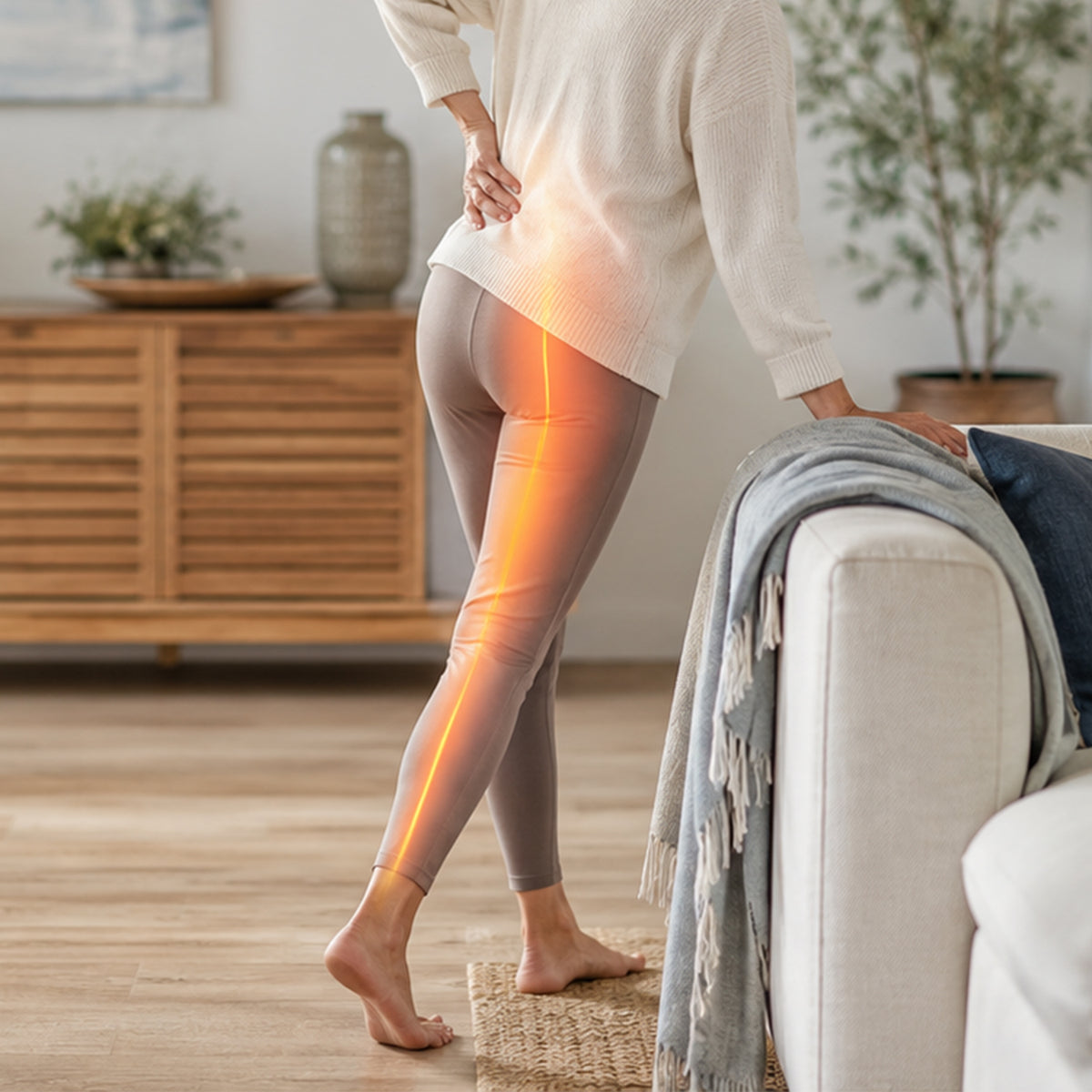
Sciatica is a pain that starts in the lower back. It moves along the sciatic nerve, and travels down the leg.
This “travels down the leg” part matters. This is very different from general lower back pain. Back pain often stays local. In some sciatica cases, the pain reaches the foot.
- Sciatica tends to move along the leg in a clear pattern. It is often felt on one side rather than both. If pain shows up in both legs at the same time, that points to something else and should be checked.
- Sciatica symptoms can vary. Some people feel sharp pain. Others describe a burning feeling. Some talk about tingling. Symptoms often worsen with sitting. Coughing or sneezing can trigger pain.
- True sciatica usually starts in the spine. A nerve root is compressed in the lower back, often at the L4, L5, or S1 level. This can be caused by a disc problem. Spinal narrowing can also be involved. Age-related changes may contribute over time.
- There is another common source called piriformis syndrome. In this case, the issue is not in the spine. It comes from a small muscle in the buttocks pressing on the sciatic nerve further down.
- The difference matters. Pain that comes from the spine may respond better to positions that lessen the pressure on that nerve. Pain that comes from the buttocks may respond better to gentle muscle-focused work. The key is to watch how the body reacts. If a movement makes leg pain worse, stop and choose a gentler option.
- Pregnancy can also bring on sciatica. So does sitting for long periods or lifting something in an awkward way.
Surgery is not usually the first step. It may be an option later, though, when symptoms are severe or not improving. Seeking support from a professional at this stage is the best option. Understanding where your symptoms come from helps guide the right treatment.
Most cases just need time to heal. Symptoms often calm down gradually. Many people recover within a few months without invasive treatment.
COMMON CAUSES


If any of the ‘red flags’ are present, please do not continue. Get it checked out immediately.
If the pain is manageable and there are no red flags, sciatica at-home treatment can be a reasonable starting point. It can feel like a long process, and it might even be harder when sleep is affected. Still, most cases do get better.
Heat or cold for sciatica pain relief comes up a lot. The best option depends on what your body is doing right now.
In the early phase of a flare, cold is often a good place to start. This is usually within the first 48 to 72 hours after symptoms begin or suddenly worsen. Cold can help calm the irritation and lower sensitivity.
A simple way to use it:
- Press a cold pack to your lower back
- Keep something between the pack and your skin
- 15 to 20 minutes should be sufficient
- You can repeat this every 1 to 2 hours if it feels helpful
As symptoms settle, heat often becomes more comfortable. This is usually after the first 72 hours, or during ongoing flare-ups that come and go. Heat can relax the muscles around the spine and makes movement feel easier.
Try a heat pack on the lower back for a short session. Many people notice this helps ease the tightness around the lower back.
Some people like to alternate between the two. Heat can help things loosen up. Cold can settle things down afterwards if needed. Go with what feels better in your body.
Never apply ice directly to the skin. Avoid using heat on a freshly aggravated area if it increases pain.
A simple rule helps here. Use what helps, and avoid what makes symptoms worse.

Memory Foam Sciatica Back & Seat Cushions
Support the lower back while sitting, at your desk or in the car.
Shop NowBefore jumping in, here are a few safety tips. These sciatica stretches gently relieve tension and support movement without aggravating symptoms.
- If a stretch sharply worsens leg pain, stop.
- If any movement sends pain further down the leg, stop.
- Glute stretches may help when the source is in the buttocks. However, they can aggravate symptoms linked to the spine. If your leg pain gets worse, switch to gentler extension movements.
- Aim for a mild stretch feeling and avoid pushing into pain.
If these stretches increase leg pain or symptoms travel further down the leg, it is best to stop and choose a gentler option. Hold each stretch for about 25 seconds. They should feel gentle and controlled rather than intense. Repeat once or twice. Do this once or twice a day if comfortable.
Knee to chest stretch
This will help your lower back when it feels tight.
Stop the exercise if your leg feels worse.
How to do it
- Start by lying on your back.
- Bend one knee toward your chest.
- Hold the pose by holding behind your thigh or shin
- Keep your other leg relaxed
Reclined figure-4 stretch
Use this exercise if your pain feels centred in the buttock. This is a common piriformis stretch that targets the small muscle that can irritate the sciatic nerve. This piriformis stretch can be helpful when symptoms are coming more from the buttock than the lower back.
How to do it
- Do this on your back and bend your knees.
- Cross one ankle over the knee opposite.
- Draw the supporting leg gently toward you.
- This should be a mild stretch.

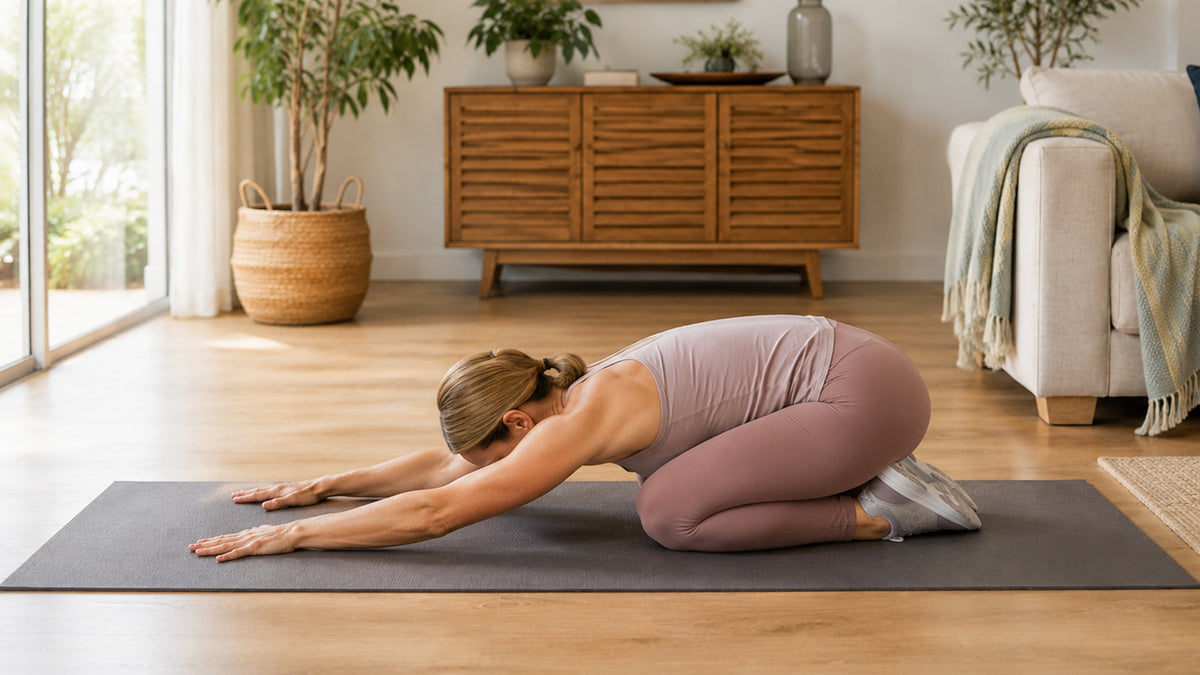
Child’s pose
Use this for general back tightness.
Don’t do this if your bending forward worsens your symptoms.
How to do it
- You should kneel comfortably.
- Sit back toward your heels.
- Reach forward with your hands.
- This should be a small movement.
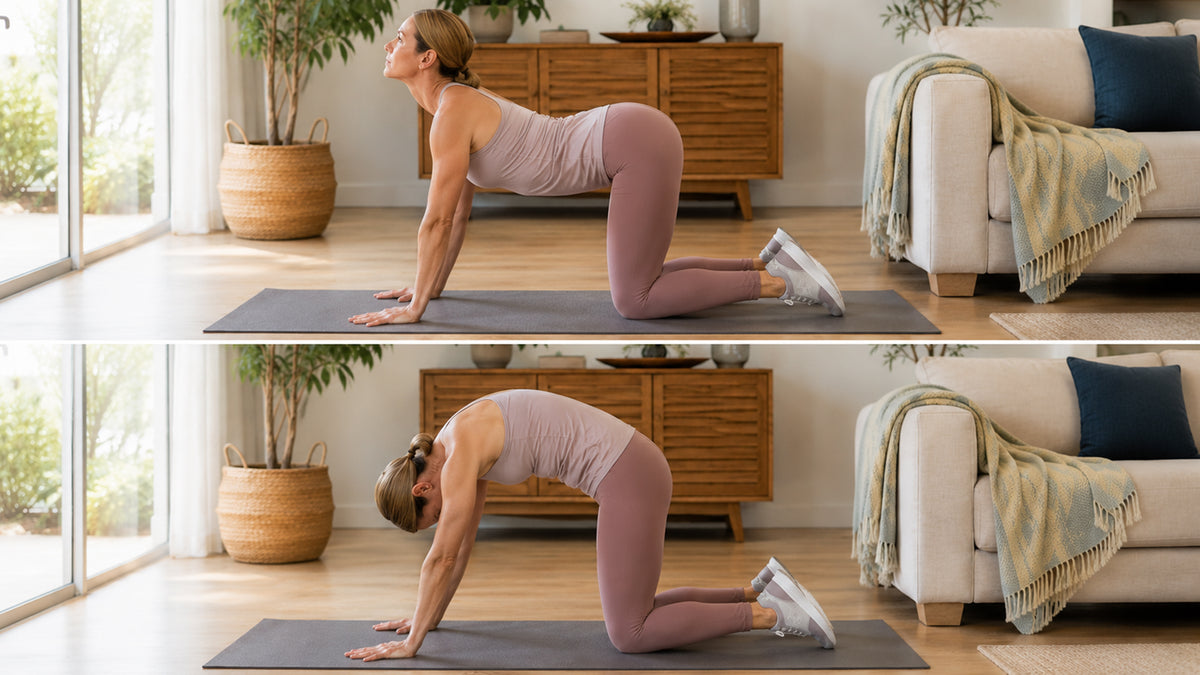
Cat-cow
Use this to loosen your spine. The exercise targets gentle spine movement.
Don’t push into pain.
How to do it
- Start on your hands and knees like a cat.
- Slowly round your back
- Return to a neutral position
- Be sure to move in a comfortable range
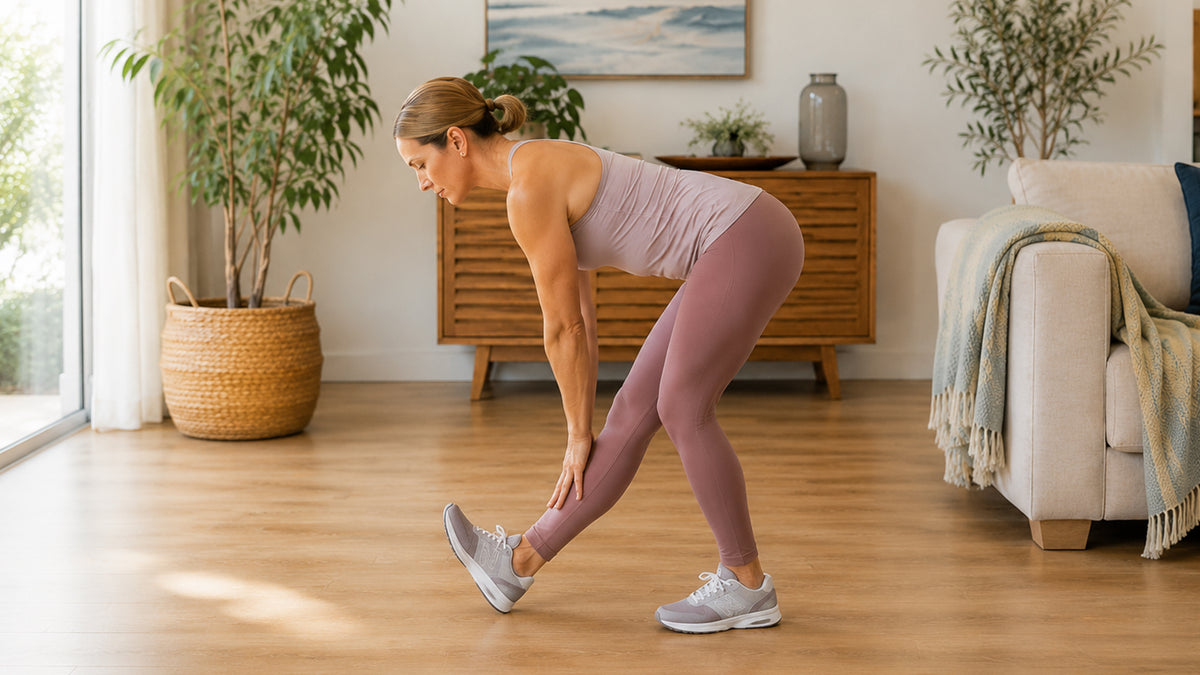
Standing hamstring stretch
Use this if the back of the leg feels tight. It targets the back of your thigh.
You should not do a deep forward bend.
How to do it
- Put one heel on a low surface
- Keep your back straight
- Hinge slightly at the hips
- Stop at a mild stretch
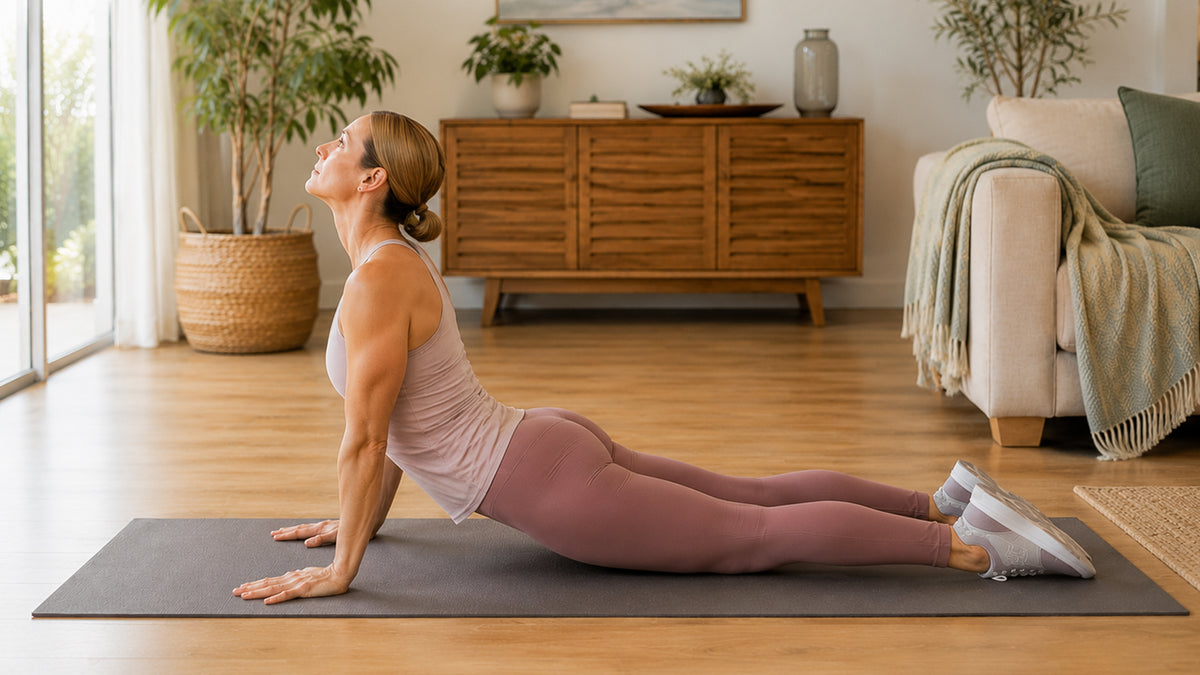
Gentle lumbar extension press-up
This targets your lower back extension. Use this if sitting makes your symptoms worse.
If your leg pain increases, stop.
How to do it
- Lie on your stomach
- Place your hands under your shoulders
- Press up slightly
- Keep hips relaxed
This is one of those problems where doing a little each day often works better than doing a lot at once.
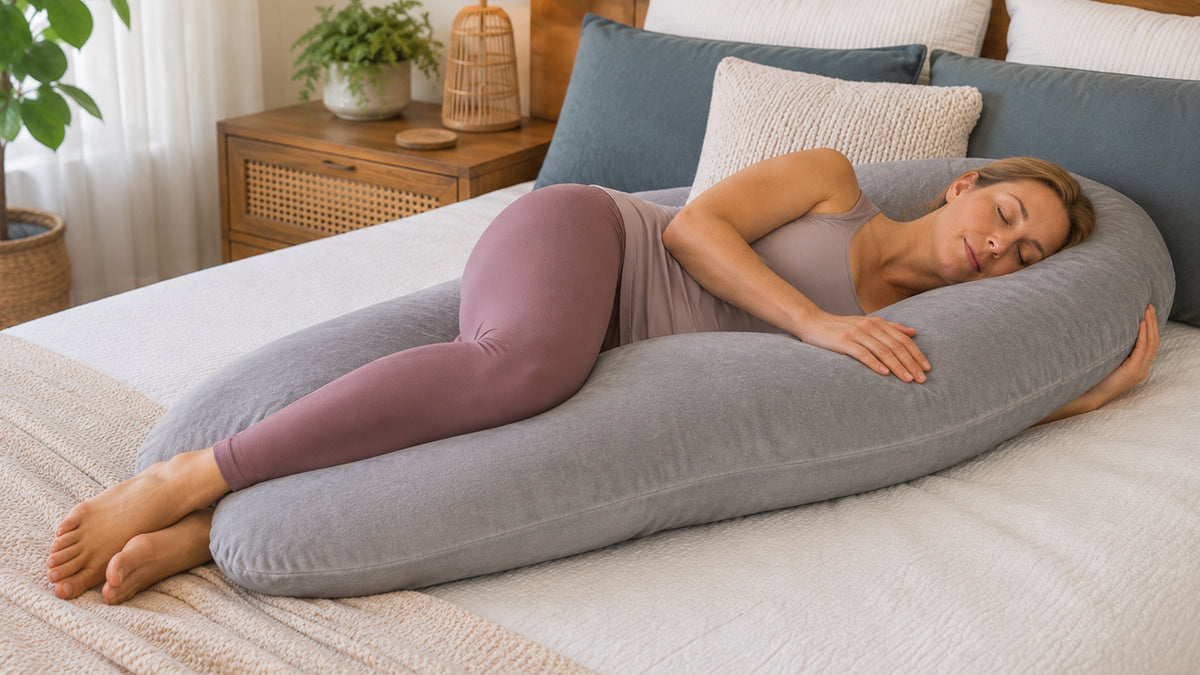
Finding the right sleeping position for sciatica can be one of the hardest parts of managing symptoms. The best sleeping position for sciatica is usually the one that reduces pressure on the lower back and keeps the spine in a neutral position.
- Side sleeping is often the most comfortable. Place a pillow between the knees. This helps keep the hips level and reduces strain on the spine. A folded towel can work just as well as a pillow. Our Full Body Pillow is ideal for this.
- Sleeping on your back can help. Put a pillow under your knees. This flattens the curve in the lower back and may ease the pressure on your nerves.
- Sleeping on the stomach is usually not a good idea. It can place the lower back in a more extended position. It can also twist the neck. It is best to avoid this position.
- Mattress choice matters. A medium-firm surface should give you better support. A very soft mattress will usually let your hips ‘sink,’ and this can cause pain. If it is not possible to replace your mattress, a firm mattress topper can help.
Small changes to your sleeping position for sciatica can make a noticeable difference over time.
If your sleep is regularly disrupted by pain, it is worth speaking with your GP. Short-term pain relief or a referral to a physio can make a big difference.
Remaining inactive all day is rarely useful. Gentle movement tends to support recovery. Walking feels manageable for most people. Begin with short walks and build up over time. Swimming can also help. Gentle cycling may also feel comfortable for some people.
As symptoms improve, strength becomes important. The muscles around the core support the spine. When they are weak, the lower back carries more load. Simple exercises can help. A physio can guide this. A multi-function resistance band can also be useful for gentle strength work at home.
Posture during the day plays a role. If your day involves a lot of sitting, take frequent breaks. A small support behind the lower back such as our back and seat cushions, can help maintain a natural position. When you lift something, keep the object near to your body. Try to use your legs rather than your back. Avoid twisting while carrying a load.
Sciatica can come back. But, over time, the habits above can lower the chance of it flaring up again.
Do you still have symptoms after a few weeks? A physiotherapist can help. In Australia, you can see a physio without a referral. For some people, a tailored plan can make a real difference.
If cost is a concern, ask your GP about a care plan that may provide Medicare support for allied health visits.
See a GP if pain is severe. Also, get checked if you experience weakness or numbness as described in our ‘red flags’ section. See a specialist if your GP refers you. This usually follows imaging showing nerve compression that needs further treatment.
Pregnancy-related sciatica is common in the second and third trimesters.
A few pregnancy changes can contribute:
Weight gain can increase load through the pelvis and lower back. Posture often shifts as the bump grows. Hormonal changes can soften ligaments, which can change how the joints feel and move. Sometimes the baby’s position can add pressure or irritation around the nerve pathway.
Most of the gentle stretches in this article can still be used. After 20 weeks, supine or reclined stretches can usually be modified to side-lying. Heat packs on the lower back can feel soothing for many people, and side-sleeping with a pillow between the knees often helps with alignment.
It is usually best to avoid deep forward folds if they worsen symptoms. Lying flat on the back after 20 weeks is also best avoided. NSAIDs should only be used if an obstetrician approves.
For extra support, a women’s health physiotherapist can probably help you best. If cost is a concern, ask a GP about a Chronic Condition Management plan, as Medicare may help cover some visits.
Sciatica can knock the wind out of you.
It often starts unexpectedly and can leave you chasing comfort from one position to the next. Sleep usually takes the biggest hit. The good news is that it usually settles over time. Many people improve steadily as they stay active and avoid aggravating movements.
Be kind to your body as it recovers. This is one of those problems where doing a little each day often works better than doing a lot at once. With the right support and a cautious approach, most people do get back to normal life.
Frequently Asked Questions
Sciatica often improves over 2-3 weeks, and many people recover within a few months. Some cases take longer, especially if symptoms keep flaring. If progress is not happening, it is worth getting it checked out.
Sciatica relief usually comes from finding positions that reduce leg pain. Heat or cold can help, depending on the stage of the flare.
Gentle activity is usually better than staying in bed all day. Short walks are a good start, then build up slowly. Rest is still useful, just in smaller doses between movements.
Sciatica is pain that travels down the leg along the sciatic nerve pathway. General lower back pain often stays in the back area.
Most cases do not cause permanent damage. There is, however, a risk. When there is significant nerve compression and you feel yourself getting weaker, emergency care is needed.
Night pain can happen when a position increases pressure or tension. Sometimes it is just harder to ignore symptoms when the body is still.
For heat or cold for sciatica, the “right” choice is the one that reduces symptoms. Cold is often preferred early in a flare. Heat often feels better once things start settling.
Yes, but keep it gentle and symptom-led. Walking is often tolerated, and simple mobility can help. Avoid exercises that increase leg pain or push symptoms further down the leg.
Often, yes. Most people improve gradually as the irritation settles down. The supportive habits discussed in this article will help you get better sooner.
An MRI is usually guided by a GP based on symptoms and exam findings. It may be considered if pain is severe or symptoms are not improving.


